Brent Crude Falls Below $99 as Trump Signals Possible U.S.-Iran Deal While Bitcoin Holds Near $77K

Global financial markets reacted sharply after U.S. President Donald Trump indicated that negotiations between the United States and Iran were “largely negotiated,” raising hopes for a possible reopening of the strategically critical Strait of Hormuz. The news triggered a steep decline in oil prices, while Bitcoin remained relatively stable near the $77,000 level.
Oil Prices Drop as Geopolitical Tensions Ease
Brent crude oil prices slipped below the psychologically important $99 per barrel mark during weekend trading. Reports suggested that optimism surrounding a potential U.S.-Iran agreement reduced fears of prolonged disruptions in Middle Eastern oil supplies.
The Strait of Hormuz remains one of the world’s most important energy chokepoints, handling nearly 20% of global oil shipments. Any military escalation or shipping blockade in the region immediately impacts worldwide energy prices. Since tensions escalated earlier in 2026, oil markets had experienced extreme volatility, with Brent crude previously climbing above $110 per barrel amid fears of supply shortages.
According to market analysts, the recent decline in crude prices reflects investor expectations that a diplomatic breakthrough could restore oil flows and reduce geopolitical risk premiums. Brent crude reportedly dropped nearly 5% to around $98.80, while West Texas Intermediate (WTI) crude also declined sharply toward the low $90 range.
Trump’s Comments Shift Market Sentiment
President Trump’s statements over the weekend played a major role in calming energy markets. He suggested that negotiations with Iran had made substantial progress and hinted that a framework agreement could include:
- A temporary ceasefire extension
- Discussions around reopening the Strait of Hormuz
- Possible sanctions relief
- Deferred nuclear negotiations
While the details remain uncertain, investors interpreted the remarks as a signal that the immediate risk of a broader regional conflict may be fading.
Despite the optimism, Trump also stated there was “no rush” to finalize a deal, emphasizing that sanctions and restrictions could remain until a formal agreement is completed. Analysts warned that even if a peace framework emerges, restoring full oil supply chains could take weeks or even months due to logistical disruptions and infrastructure damage.
Bitcoin Remains Stable Near $77K
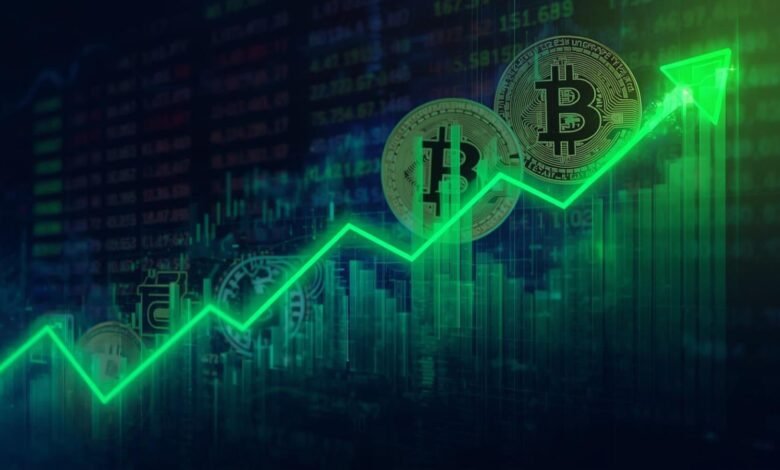
While traditional commodity markets experienced heavy volatility, Bitcoin remained comparatively stable around the $77,000 level. Crypto markets continued operating throughout the U.S. Memorial Day holiday weekend, even as American stock exchanges and bond markets remained closed.
Bitcoin’s resilience highlighted the growing perception of cryptocurrency as a parallel financial asset that can maintain liquidity during traditional market closures. Although oil prices fell dramatically, Bitcoin showed only modest fluctuations, reflecting cautious but steady investor sentiment.
Some analysts believe Bitcoin’s stability during geopolitical uncertainty demonstrates its evolving role as a hedge against traditional financial system shocks. However, others argue that crypto markets remain highly speculative and closely tied to broader investor risk appetite.
Why the Strait of Hormuz Matters
The Strait of Hormuz has become the center of global market attention throughout 2026. The narrow waterway connects the Persian Gulf to international shipping routes and serves as a critical transit path for oil exports from countries such as:
- Saudi Arabia
- Iran
- Iraq
- Kuwait
- United Arab Emirates
Disruptions in the region have already caused some of the largest oil price swings seen in years. Market observers noted that the current crisis became one of the most significant energy supply disruptions since the 1970s oil crisis.
Earlier this year, fears surrounding Iranian restrictions and military tensions pushed oil prices sharply higher. Several countries also released strategic petroleum reserves to stabilize markets and prevent deeper economic damage.
Now, hopes for a diplomatic breakthrough are reversing part of that rally.
Impact on Global Markets
The possibility of reduced Middle Eastern tensions boosted investor confidence across multiple asset classes. Currency markets responded positively, with the U.S. dollar weakening slightly as traders shifted toward riskier assets.
Meanwhile, stock futures for major U.S. indexes moved higher as investors anticipated lower energy costs and easing inflation pressures. Lower oil prices typically reduce transportation and manufacturing costs, which can improve corporate profitability and consumer spending.
However, analysts cautioned that markets remain highly sensitive to headlines surrounding Iran negotiations. Any indication that talks are collapsing could rapidly send oil prices higher again.
Long-Term Oil Price Outlook
Investment banks and energy analysts remain divided on the long-term direction of crude oil prices. Some forecasts suggest Brent crude could eventually average near $60 per barrel if geopolitical tensions ease and global supply normalizes.
Others warn that energy markets remain structurally fragile. Even with a peace agreement, supply chains, tanker operations, insurance costs, and shipping logistics may take considerable time to recover fully.
There are also concerns that future geopolitical flare-ups could quickly reignite volatility. The global energy system has become increasingly sensitive to disruptions following years of underinvestment, sanctions, and supply chain challenges.
Crypto Markets Continue to Watch Macro Developments
The cryptocurrency market is also closely monitoring macroeconomic and geopolitical developments. Bitcoin traders are paying attention to:
- Oil price movements
- Federal Reserve policy expectations
- Inflation trends
- U.S. dollar strength
- Global risk sentiment
Historically, Bitcoin has shown periods of correlation with risk assets such as technology stocks, although it occasionally behaves independently during geopolitical uncertainty.
With traditional markets closed for the holiday weekend, crypto traders remained active, helping Bitcoin maintain steady trading volumes and price support around the $77K range.
Conclusion
The sharp decline in Brent crude prices below $99 highlights how quickly geopolitical headlines can reshape global financial markets. Optimism surrounding a potential U.S.-Iran agreement reduced fears of prolonged supply disruptions in the Strait of Hormuz, leading to a significant pullback in oil prices.
At the same time, Bitcoin demonstrated relative stability near $77,000, reinforcing its growing role in global financial markets during periods of uncertainty. While investors welcomed signs of diplomatic progress, significant risks remain, and markets are expected to stay highly sensitive to future developments in the Middle East.